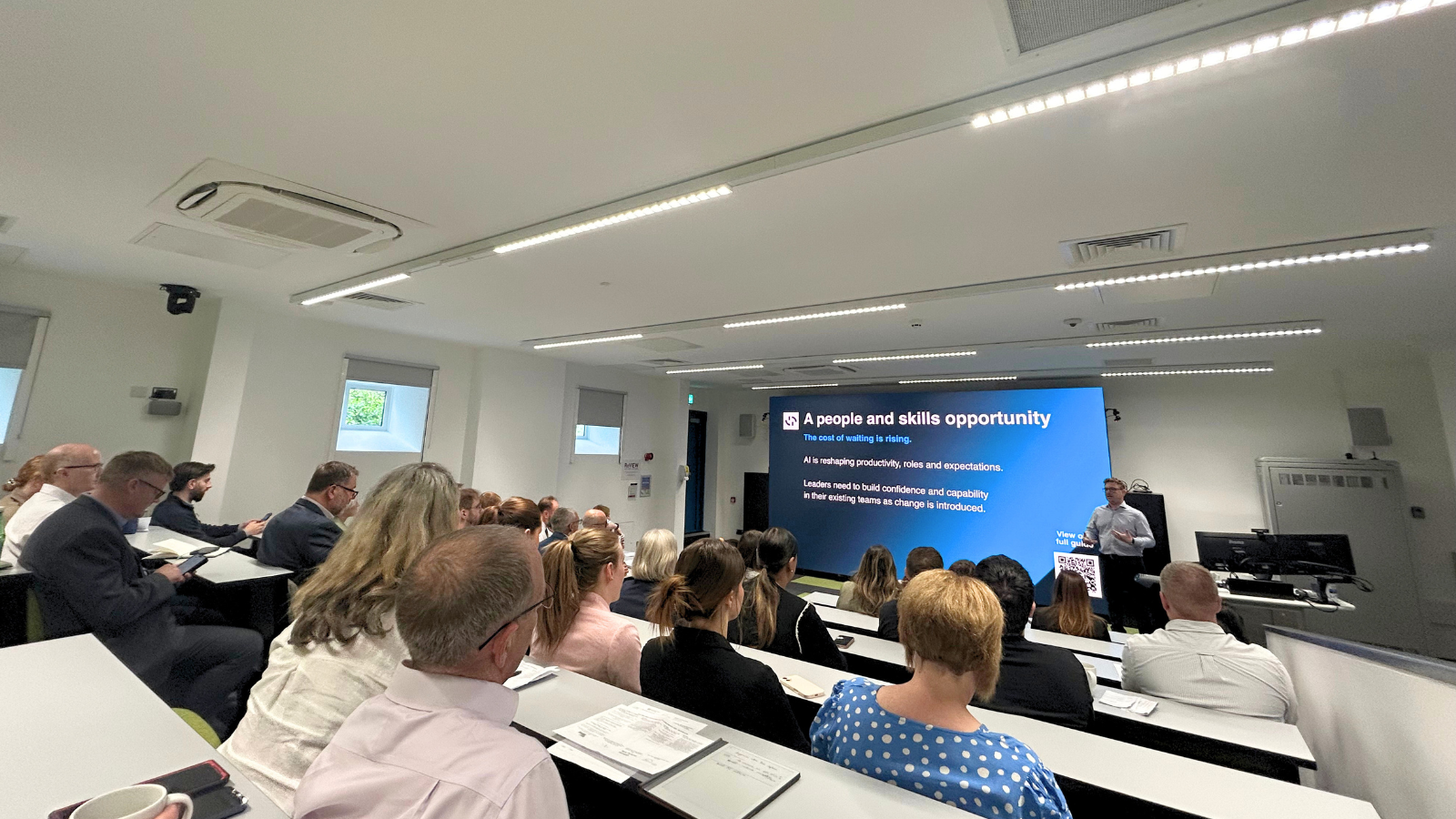
Digital Planning delivered its AI culture workshop at the East Midlands Chamber’s People and Skills conference, sharing research-backed insights on why AI adoption fails.
Co-founder James Ferraby led the workshop, drawing on insights from 80+ business interviews featured in Digital Planning’s latest research guide: Building a digital culture that makes tech projects work.
This workshop is part of Digital Planning’s strategic partnership with the East Midlands Chamber of Commerce – bringing practical AI expertise directly to regional businesses
Original research from the guide found that 77% of the hardest AI challenges are cultural, not technical.
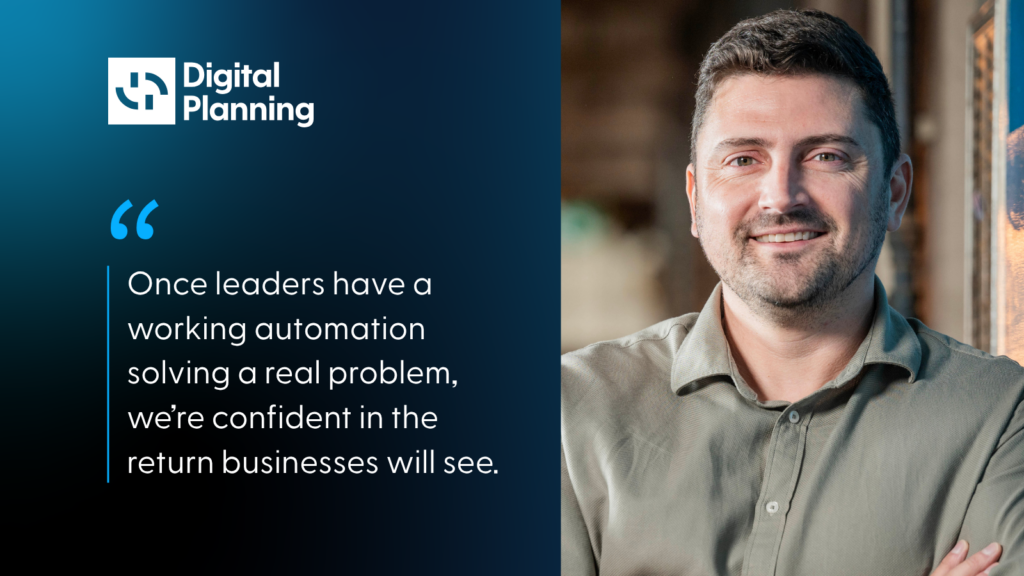
James said “We see this day in, day out. Watching the gap expand between businesses that are taking on AI and businesses that are not.”
The cost of waiting is rising
James opened the workshop by explaining the stakes of falling behind. He said businesses that fail to augment their people and systems with AI are falling behind those that do.
James added: “A team member who fully adapts to working with AI can be up to 20 times more effective than one who does not.
“That figure goes well beyond using ChatGPT for emails. It requires real workflow change – redesigned processes, proper training and the right governance to back it up.”
To show how far AI has moved in the last 12 months, James demonstrated three working examples.
- AI assistant for support tickets.
- AI searches across emails and files.
- AI workflows for sales and CRM automation.
Each example kept a human in the loop. “You’ve got to have accountability, AI gets it wrong and you need to be able to trace where it came from and who approved it,” James told delegates.
James then highlighted two risks leaders need to manage to improve AI adoption:
- Fragmentation – Staff across the business are already building their own AI tools – useful in isolation but hard to scale, govern or support. Without a shared framework, these microsystems add complexity and siloed working.
- Accountability – AI acting without a human sign-off creates real liability, which is why workflows need to be traceable and keep people in the loop.
Both risks are addressed by ISO 42001 – the international standard for AI management systems.
Digital Planning already holds ISO 9001 and ISO 27001 certification and is on course to be one of the first businesses in the region to achieve ISO 42001.
Job displacement was a recurring concern from the floor during the workshop.
James said: “You don’t really have a choice. The rest of the world is doing it anyway.”
But he was equally direct about what good leadership looks like in that context.
“It’s the role of a leader to look for where staff can use that extra time on other areas of the business. If staff don’t adapt to changing times they will get left behind – but this is why we need to give staff space for ideation and support with AI, rather than closing off to it.”
Next steps
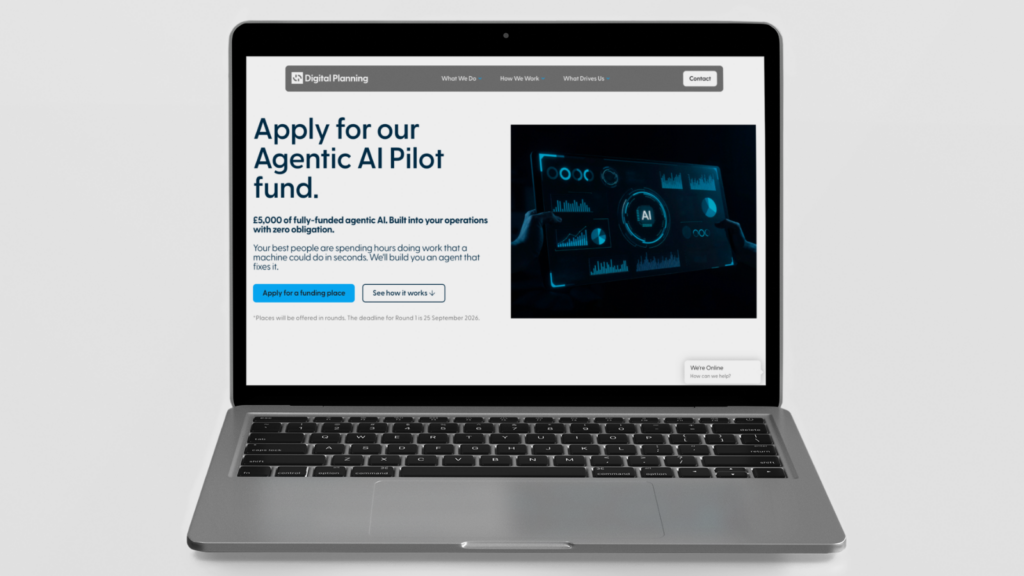
Digital Planning is offering a fully funded pilot for East Midlands organisations that want to test AI on their own data and processes.
Register your interest here: https://www.digitalplanning.tech/agentic-ai-fund/